








Bachelor of Audio Production
GET EQUIPPED TO LAUNCH YOUR CAREER IN THE AUDIO INDUSTRY.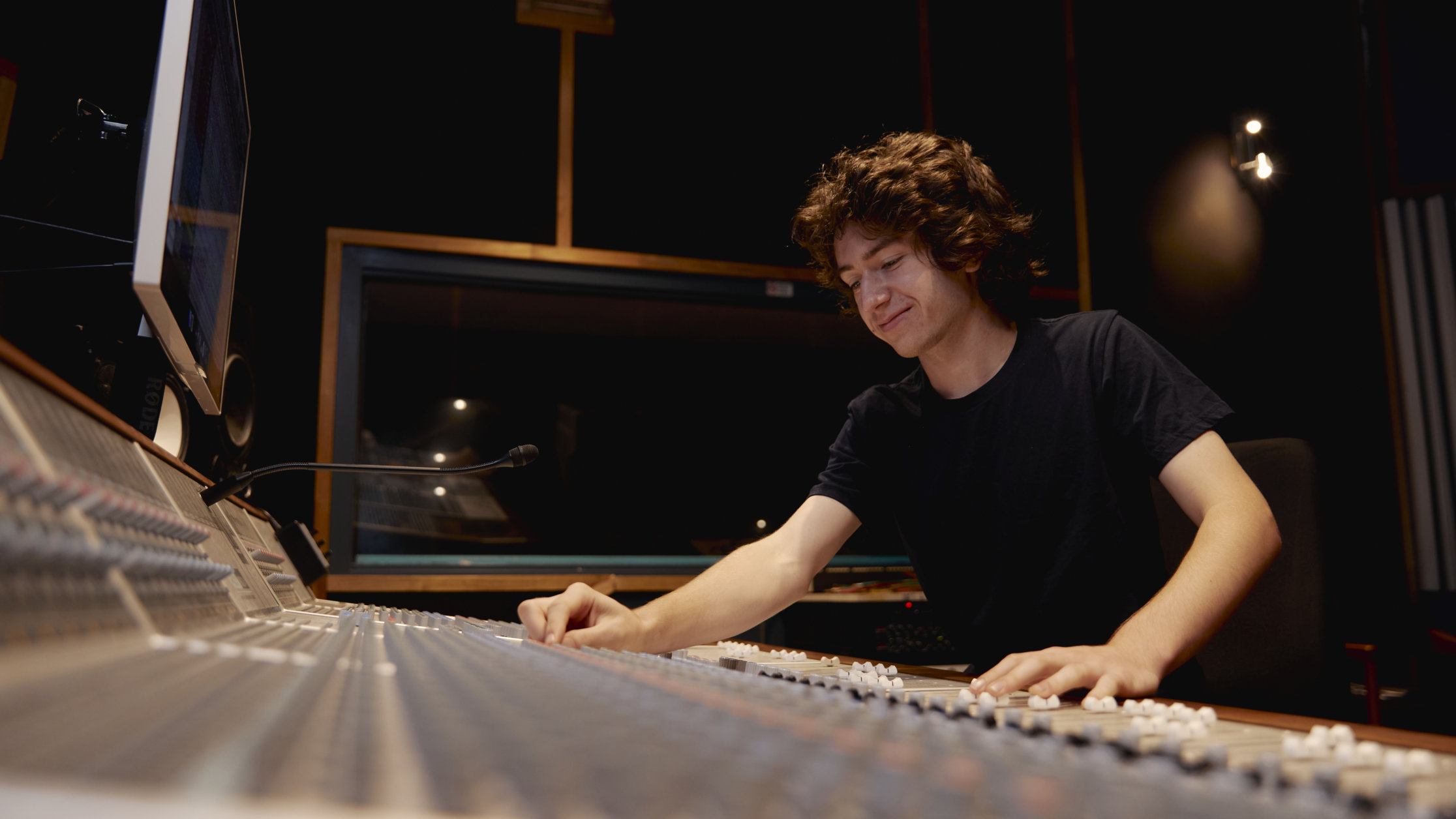
Available at:
Auckland
Fees
Bachelor of Audio Production
Domestic Fees
$39,835.00 NZD
- Year One (Level 5) Administration Fee: $500.00 (one-off fee)
Tuition Fee: $12,920.00 - Year Two (Level 6)
Tuition Fee: $13,420.00 - Year Three (Level 7)
Tuition Fee $13,495.00
GST Included
Domestic Students Only
Programme fees may be paid by a student loan. Fees must be paid annually, before the commencement of study.
For any queries regarding payment, please contact: [email protected]
Bachelor of Audio Production
International Fees
$90,555.00 NZD
- Year One (Level 5) Administration Fee: $500.00 (one-off fee)
Tuition Fee: $29,750.00 - Year Two (Level 6)
Tuition Fee: $30,990.00 - Year Three (Level 7)
Tuition Fee $30,815.00
GST Included
Fees must be paid annually, before the commencement of study.
For any queries regarding payment, please contact: [email protected]
Duration(s)
Full time: 3 years
Bachelor
Bachelor of Audio Production
Course Durations
Full time: 3 years
Bachelor
Start Date(s)
Auckland
February 2026
Bachelor of Audio Production
Start Dates
Auckland
February 2026
Entry Requirements
Bachelor of Audio Production
Domestic Entry Requirements
A copy of the student's valid photo ID must be provided.
For Level 7 Degree programmes, candidates are required to have gained a minimum of NCEA Level 3 or equivalent.
Special Admission
Domestic applicants aged 20 years or above who have not met the General Admission or entry requirements for a programme but whose skills, education or work experience indicate that they have a reasonable chance of success may be eligible for Special Admission. Special admission will be granted at the discretion of the Academic Manager or designated nominee. Such applicants may be required to successfully complete a foundation, bridging or tertiary introduction programme as a condition of entry into higher level programmes.
Provisional Admission
Domestic applicants aged under 20 years who have not met the general academic admission and entry criteria for a programme but who can demonstrate a reasonable chance of success through other educational attainment and/or work or life experience may be eligible for provisional entry at the discretion of the Academic Manager. Provisional entry places restrictions on re-enrolment to be lifted if the applicant’s performance is deemed satisfactory by the Academic Manager.
Selection Process
Where there are more applicants than the number of places available a selection process may be applied. An offer of place in a diploma or degree programme would be extended to applicants who meet the entry criteria and demonstrate the potential to successfully complete the programme on the basis of:
A portfolio of work that represents the applicant’s level of achievement.
An interview.
Curriculum vitae (optional).
Applicants who submit a formal application to enrol in the programme, and who meet the entry criteria would be invited to submit a portfolio of work and participate in an interview. The purpose of the interview is to assess the applicants’ suitability for the programme. It will determine whether an applicant is offered a place in the programme, and if so, at what level of the programme the applicant will be offered a place. Applicants would be welcome to enlist whānau support.
Cross Crediting
Cross crediting is at the discretion of the Academic Manager and will be applied in circumstances where a student is transitioning from one programme to another. To ensure the currency of learning, cross crediting of courses will be automatic for any courses undertaken within fives years of the cross crediting.
Application process for RPL or credit transfer
Recognition of Prior Learning (RPL) or credit transfer applies to circumstances where a learner can demonstrate relevant and current knowledge gained through prior learning and/ or a learner is requesting credits to be transferred from a qualification with comparable outcomes.
Applicants who believe they meet the criteria for RPL or credit transfer should complete the application form and attach relevant certified documentation including official academic records and/or evidence of learning outcomes being met through previous work/life experience. An interview may also be conducted with the Academic Manager. Each application will be assessed by relevant academic staff.
An applicant must be a minimum of 17 years at the start date of the programme. Applicants aged less than 18 years old must apply with parental/guardian consent. *Discretionary entry does not apply to this requirement
All students are given the tutorial and pastoral support needed to satisfactorily engage with the academic and technical demands of the programme, and in particular students entering with the minimum qualification of NCEA Level 2.
All entry is at the discretion of the Academic Manager.
Bachelor of Audio Production
International Entry Requirements
International students seeking admission to SAE must be at least 18 years of age at the time of application.
A copy of the student's valid passport must be provided.
Completion of the equivalent of NCEA Level 3 or University Entrance qualification.
English Language Requirements
International students who are not native English speakers need to provide additional evidence of language skills and complete one of the following:
- International English Language Testing System (IELTS): A band score of 6 or higher (only the Academic Test is accepted), OR
- Test of English as a Foreign Language (TOEFL): A score of 550 or higher (paper based test), 60 or higher (internet based test)
Selection Process
Where there are more applicants than the number of places available a selection process may be applied. An offer of place in a diploma or degree programme would be extended to applicants who meet the entry criteria and demonstrate the potential to successfully complete the programme on the basis of:
- A portfolio of work that represents the applicant’s level of achievement.
- An interview.
- Curriculum vitae (optional).
Applicants who submit a formal application to enrol in the programme, and who meet the entry criteria would be invited to submit a portfolio of work and participate in an interview. The purpose of the interview is to assess the applicants’ suitability for the programme. It will determine whether an applicant is offered a place in the programme, and if so, at what level of the programme the applicant will be offered a place. Applicants would be welcome to enlist whānau support.
All entry is at the discretion of the Academic Manager.
YOUR CAREER IN AUDIO BEGINS NOW
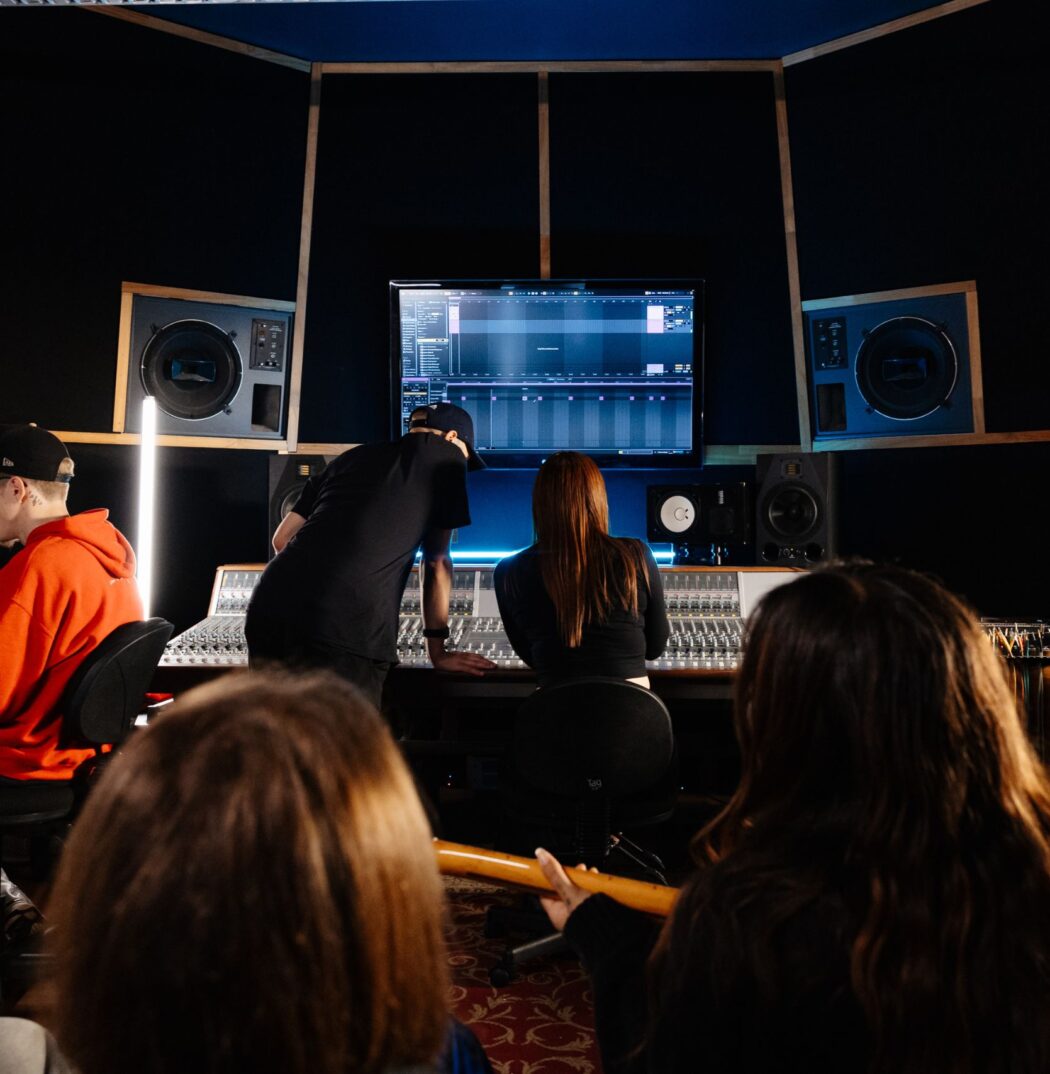
Master your craft on small and large format consoles and record the music genres you're interested in.
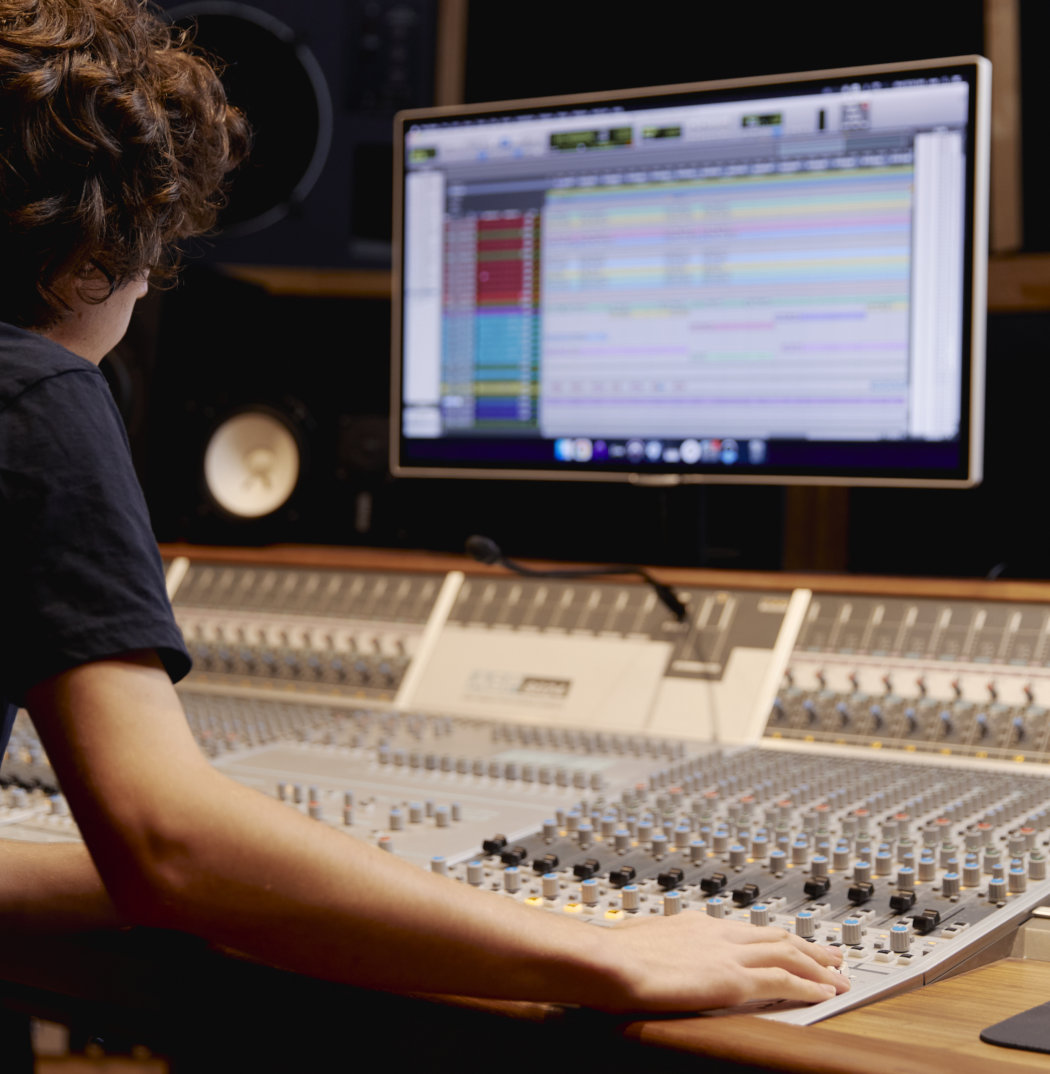
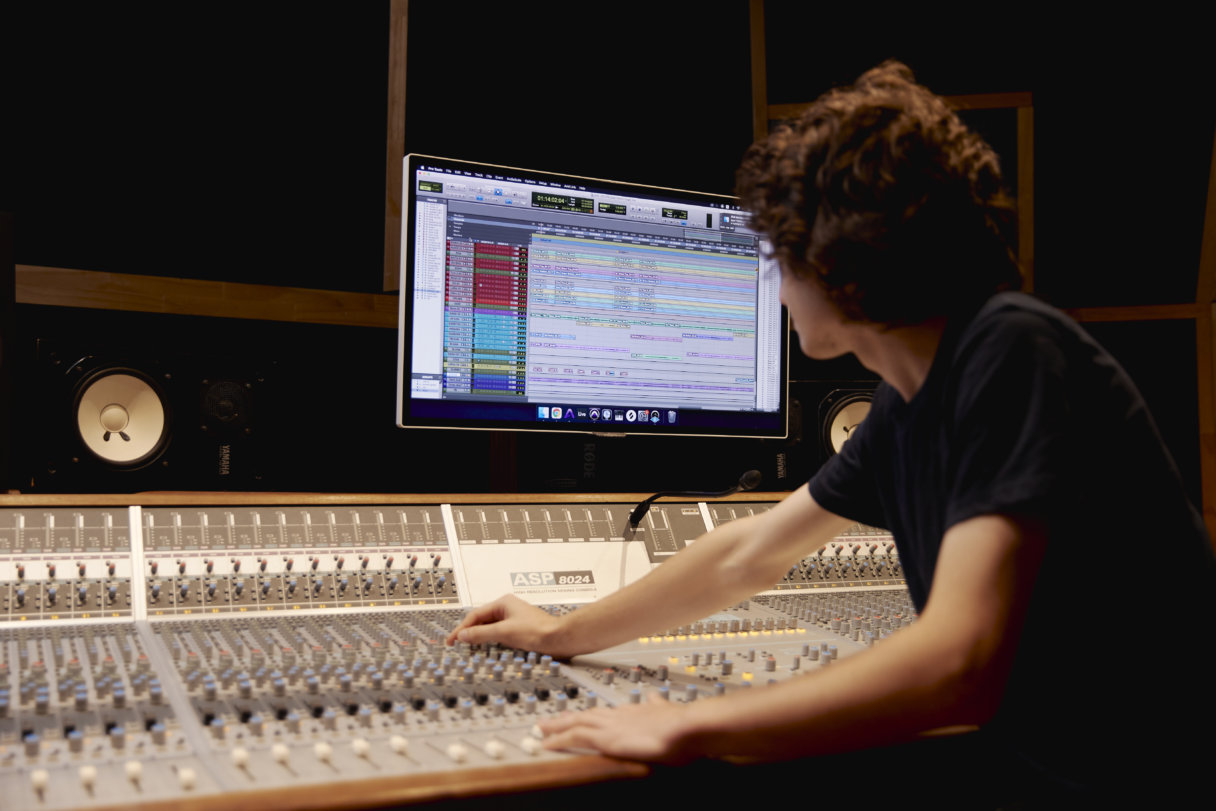
Get practical experience in live sound, electronic music, audio post-production and audio for screen.
This Audio Production Course Covers
Studio Production
Post Production
Mastering
Mixing
Sound Principals
Working with Artists
Working in team environments
Course Structure
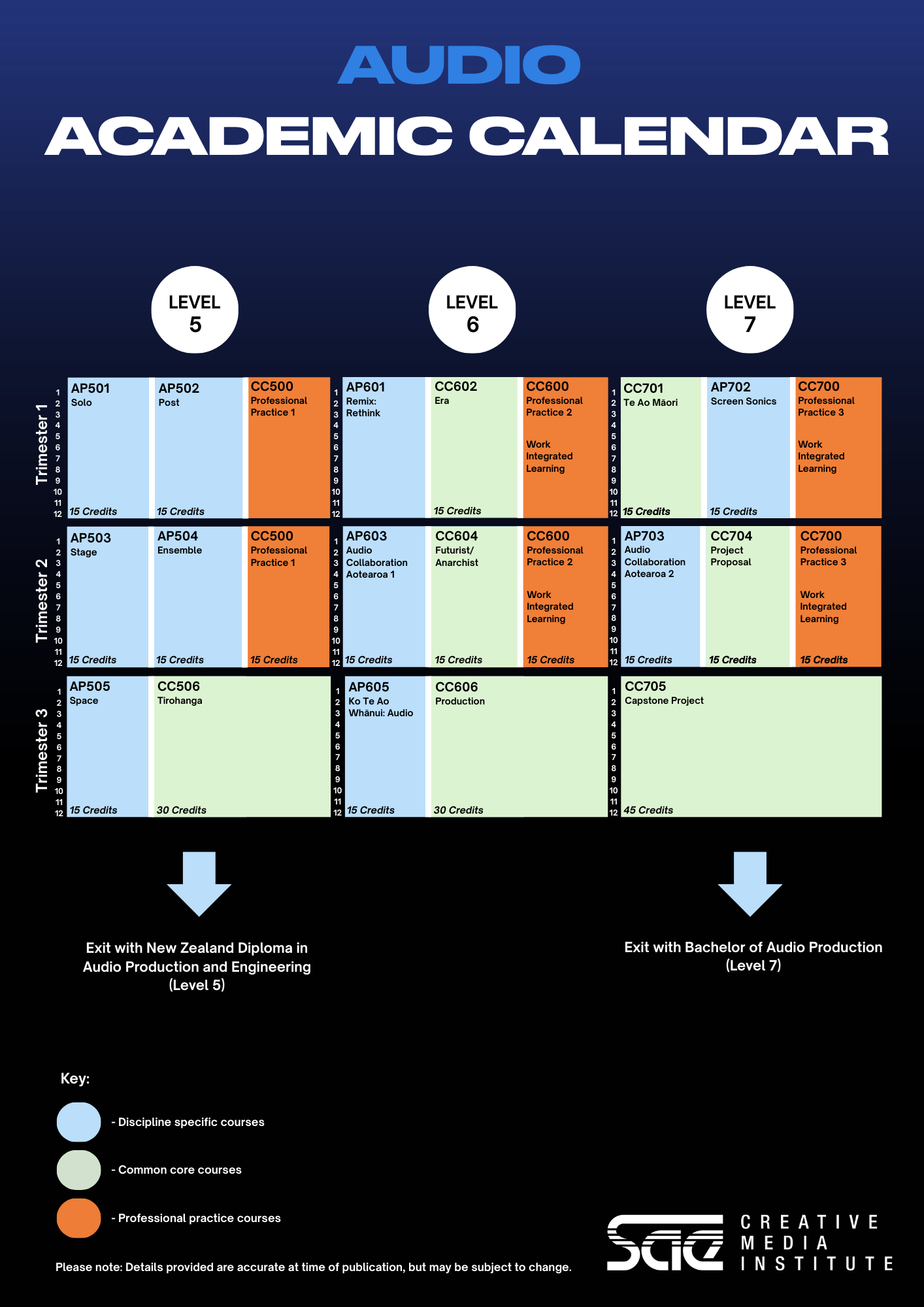
The Bachelor of Production is broken up into three distinct levels, each designed to develop different skills.
Level 5
Credit Points: 15
This 36-week course provides a platform for engagement with transferable skills via collaborative client projects which may include contracted roles within projects of more advanced student groups. With a key focus on employability in Aotearoa/New Zealand students engage with professional practice situated in the holistic ideals of Te Ao Maori. Students conduct peer review via the Transferable Skills Matrix in an effort to foster and develop employability skills.
This 36-week course provides a platform for engagement with transferable skills via collaborative client projects which may include contracted roles within projects of more advanced student groups. With a key focus on employability in Aotearoa/New Zealand students engage with professional practice situated in the holistic ideals of Te Ao Maori. Students conduct peer review via the Transferable Skills Matrix in an effort to foster and develop employability skills.
Credit Points: 15
Introduces essential production tools and techniques, and explores sonic issues and implications of conducting a collaborative audio recording in a small-to-medium acoustic space. Introduces types of audio assets commonly developed in this space and introduces basic microphone techniques, recording, editing, mixing and mastering skills.
Introduces essential production tools and techniques, and explores sonic issues and implications of conducting a collaborative audio recording in a small-to-medium acoustic space. Introduces types of audio assets commonly developed in this space and introduces basic microphone techniques, recording, editing, mixing and mastering skills.
Credit Points: 15
Introduction to sound design, foley and ADR (Automated Dialogue Replacement) in various screen formats. Students will develop practical creative post production skills for limited scope productions.
Introduction to sound design, foley and ADR (Automated Dialogue Replacement) in various screen formats. Students will develop practical creative post production skills for limited scope productions.
Credit Points: 15
Explores sonic issues and implications of conducting a mix of a live on-stage performance. Introduces a range of audio, lighting and vision assets commonly developed in this space with relevant production techniques. Approaches to editing, mixing and mastering are explored in-studio. A reflective blog details the production process and challenges presented.
Explores sonic issues and implications of conducting a mix of a live on-stage performance. Introduces a range of audio, lighting and vision assets commonly developed in this space with relevant production techniques. Approaches to editing, mixing and mastering are explored in-studio. A reflective blog details the production process and challenges presented.
Credit Points: 15
Explores sonic issues and implications of conducting a collaborative audio recording in a medium-to-large acoustic space. Introduces types of audio assets commonly developed in this space, and develops recording, editing, mixing and mastering skills.
Explores sonic issues and implications of conducting a collaborative audio recording in a medium-to-large acoustic space. Introduces types of audio assets commonly developed in this space, and develops recording, editing, mixing and mastering skills.
Credit Points: 15
Introduction to audio-visual installation in stadia, theatres, concert halls, galleries and other commercial workplaces. Groups will engage with acousticians, designers and will observe installation, operational and acoustic testing processes.
Introduction to audio-visual installation in stadia, theatres, concert halls, galleries and other commercial workplaces. Groups will engage with acousticians, designers and will observe installation, operational and acoustic testing processes.
Credit Points: 30
Requires groups to produce a suite of outputs that display an individualised integration of production techniques acquired over the previous courses. Includes a reflective blog on the multiple ways such integration occurs and the effectiveness of such.
Requires groups to produce a suite of outputs that display an individualised integration of production techniques acquired over the previous courses. Includes a reflective blog on the multiple ways such integration occurs and the effectiveness of such.
Level 6
Credit Points: 15
This 36-week course provides a platform for engagement with transferable skills via Work-Integrated Learning and collaborative client projects which may include contracted roles within projects of more advanced student groups. Students will accumulate 40 hours of Work-Integrated Learning via professional industry placement. Students and WIL clients conduct peer review via the Transferable Skills Framework in an effort to foster and develop employability skills.
This 36-week course provides a platform for engagement with transferable skills via Work-Integrated Learning and collaborative client projects which may include contracted roles within projects of more advanced student groups. Students will accumulate 40 hours of Work-Integrated Learning via professional industry placement. Students and WIL clients conduct peer review via the Transferable Skills Framework in an effort to foster and develop employability skills.
Credit Points: 15
Otherwise known as Akaaka; using a single set of audio production assets students will remix and re-think those assets to achieve multiple stylistic outcomes. The sonic outputs will be subject to peer analysis and critique, and discussed in terms of genre implications. The dynamics of collaborative composition and production will form the basis of experiential learning and reflection.
Otherwise known as Akaaka; using a single set of audio production assets students will remix and re-think those assets to achieve multiple stylistic outcomes. The sonic outputs will be subject to peer analysis and critique, and discussed in terms of genre implications. The dynamics of collaborative composition and production will form the basis of experiential learning and reflection.
Credit Points: 15
In CC602 Era students will examine the relationship between social and technological context and creative outputs. Students will choose a heritage screen or sonic product to explore and reflect upon its cultural/historical backdrop. Students will compose/produce a replica to meet the genre and/or stylistic characteristics of the original, and give consideration for how that product can be re-contextualised in a modern era.
In CC602 Era students will examine the relationship between social and technological context and creative outputs. Students will choose a heritage screen or sonic product to explore and reflect upon its cultural/historical backdrop. Students will compose/produce a replica to meet the genre and/or stylistic characteristics of the original, and give consideration for how that product can be re-contextualised in a modern era.
Credit Points: 15
Students engage with the history of Aotearoa New Zealand audio practice and its current industry. Examining multiple genres and relevant practice, students will create an audio production that either artistically or critically responds to a cultural aspect of an Aotearoa New Zealand audio aesthetic. This is a collaborative project co-taught with AP703, the students of which will assign production roles, deadlines and deliverables.
Students engage with the history of Aotearoa New Zealand audio practice and its current industry. Examining multiple genres and relevant practice, students will create an audio production that either artistically or critically responds to a cultural aspect of an Aotearoa New Zealand audio aesthetic. This is a collaborative project co-taught with AP703, the students of which will assign production roles, deadlines and deliverables.
Credit Points: 15
Identify a current published writer/producer in the context of Futurist- Anarchist. Explore and reflect upon their most impactful work. Produce a screen or sonic output displaying a range of avant-garde compositional and production techniques. Create a reflective blog discussing the tools and techniques developed and applied.
Identify a current published writer/producer in the context of Futurist- Anarchist. Explore and reflect upon their most impactful work. Produce a screen or sonic output displaying a range of avant-garde compositional and production techniques. Create a reflective blog discussing the tools and techniques developed and applied.
Credit Points: 15
Students research and reflect upon representation of culture in international audio-visual works and relevant industry practices by region. Students produce an audio/visual output offering insight into previously unfamiliar cultural practice. Reflective content is included within the work.
Students research and reflect upon representation of culture in international audio-visual works and relevant industry practices by region. Students produce an audio/visual output offering insight into previously unfamiliar cultural practice. Reflective content is included within the work.
Credit Points: 30
Students provide technical production crew support for those enrolled in Level 7 interdisciplinary collaborative course CC705 Fundamental Project Production. Students enrolled in CC606 will pitch for the various production roles on offer and under Facilitator supervision, Level 7 students will assign production roles and together groups will develop and deliver approved creative research-informed sonic-screen projects. The key focus is effective engagement with assigned responsibilities, deadlines and deliverables in a group dynamic.
Students provide technical production crew support for those enrolled in Level 7 interdisciplinary collaborative course CC705 Fundamental Project Production. Students enrolled in CC606 will pitch for the various production roles on offer and under Facilitator supervision, Level 7 students will assign production roles and together groups will develop and deliver approved creative research-informed sonic-screen projects. The key focus is effective engagement with assigned responsibilities, deadlines and deliverables in a group dynamic.
Level 7
Credit Points: 15
This 36-week course provides a platform for engagement with transferable skills via Work-Integrated Learning and collaborative client projects which will include assigning roles to and evaluating the performance of less advanced student groups. Students will accumulate 40 hours of Work-Integrated Learning via professional industry placement. Students and WIL clients conduct peer review via the Transferable Skills Framework in an effort to foster and develop employability skills.
Tuakana-Teina project
Level 7 and 5 students are partnered in an informal facilitated mentor programme. The Tuakana (mentor) provides leadership and assistance for the Teina (mentee) and includes the mentee in the culture and community of the Level 7 projects.
This 36-week course provides a platform for engagement with transferable skills via Work-Integrated Learning and collaborative client projects which will include assigning roles to and evaluating the performance of less advanced student groups. Students will accumulate 40 hours of Work-Integrated Learning via professional industry placement. Students and WIL clients conduct peer review via the Transferable Skills Framework in an effort to foster and develop employability skills.
Tuakana-Teina project
Level 7 and 5 students are partnered in an informal facilitated mentor programme. The Tuakana (mentor) provides leadership and assistance for the Teina (mentee) and includes the mentee in the culture and community of the Level 7 projects.
Credit Points: 15
To engage with and critically reflect upon the unique cultural landscape of Aotearoa and to personally reflect upon its values and meaning. Visits to places of cultural significance and engagement with local iwi will underpin facilitated studio sessions. Students will collaboratively produce an audio-visual product to holistically represent and reflect chosen aspects of this.
To engage with and critically reflect upon the unique cultural landscape of Aotearoa and to personally reflect upon its values and meaning. Visits to places of cultural significance and engagement with local iwi will underpin facilitated studio sessions. Students will collaboratively produce an audio-visual product to holistically represent and reflect chosen aspects of this.
Credit Points: 15
Introduces techniques and theories that will assist in evaluating different aspects of screen sound design. Screen theory, critical listening, and technological considerations may be utilised as students engage with screen sound and its effect. Students will reflect on creative practices and production techniques, and assess the effectiveness of the work.
Introduces techniques and theories that will assist in evaluating different aspects of screen sound design. Screen theory, critical listening, and technological considerations may be utilised as students engage with screen sound and its effect. Students will reflect on creative practices and production techniques, and assess the effectiveness of the work.
Credit Points: 15
Students engage with the history of Aotearoa New Zealand audio practice and its current industry. Examining multiple genres and relevant practice, students will create an audio production that either artistically or critically responds to a cultural aspect of an Aotearoa New Zealand audio aesthetic. This is a collaborative project co-taught with AP603, the students of which will be assigned production roles, deadlines and deliverables.
Students engage with the history of Aotearoa New Zealand audio practice and its current industry. Examining multiple genres and relevant practice, students will create an audio production that either artistically or critically responds to a cultural aspect of an Aotearoa New Zealand audio aesthetic. This is a collaborative project co-taught with AP603, the students of which will be assigned production roles, deadlines and deliverables.
Credit Points: 15
In this design phase that informs CC705 Fundamental Project Production, students collaboratively develop and pitch multiple sonic-screen project briefs viable for delivery within the CC705 timeframe. Peer review, critique, reflection and industry practitioners pitch sessions inform the final project focus, technologies, methodologies and delivery modes. The scope of the project should be finely tuned with creative and production duties defined and assigned.
In this design phase that informs CC705 Fundamental Project Production, students collaboratively develop and pitch multiple sonic-screen project briefs viable for delivery within the CC705 timeframe. Peer review, critique, reflection and industry practitioners pitch sessions inform the final project focus, technologies, methodologies and delivery modes. The scope of the project should be finely tuned with creative and production duties defined and assigned.
Credit Points: 45
A single trimester interdisciplinary collaborative course for Level 7 Screen, Audio and Music Production students, with production crew support from Level 6 students enrolled in CC606 Production Profile. Under Facilitator supervision, groups develop and deliver approved creative research-informed sonic-screen projects. The key focus is the assignment, management and review of project partner work responsibilities, deadlines and deliverables. A key driver is the critical engagement with the context of interdisciplinary research by creative practice, as opposed to the duration of work
A single trimester interdisciplinary collaborative course for Level 7 Screen, Audio and Music Production students, with production crew support from Level 6 students enrolled in CC606 Production Profile. Under Facilitator supervision, groups develop and deliver approved creative research-informed sonic-screen projects. The key focus is the assignment, management and review of project partner work responsibilities, deadlines and deliverables. A key driver is the critical engagement with the context of interdisciplinary research by creative practice, as opposed to the duration of work
NZQA Course Codes
NZQA Level 5 Bachelor (3 Trimesters)
NZQA Level 6 Bachelor (3 Trimesters)
NZQA Level 7 Bachelor (3 Trimesters)
New Zealand Qualifications Authority
NZQA Level 7
This is an NZQA accredited programme of study that leads to the Level 7 NZ Bachelor of Audio Production.
What jobs will this course lead me into?
Studio Engineer
Music Producer
Game Audio Specialist
Sound Editor
Staging Crew
Audio/Visual Technician
Sound Designer
Live Sound Engineer/Operator
Radio Broadcasting
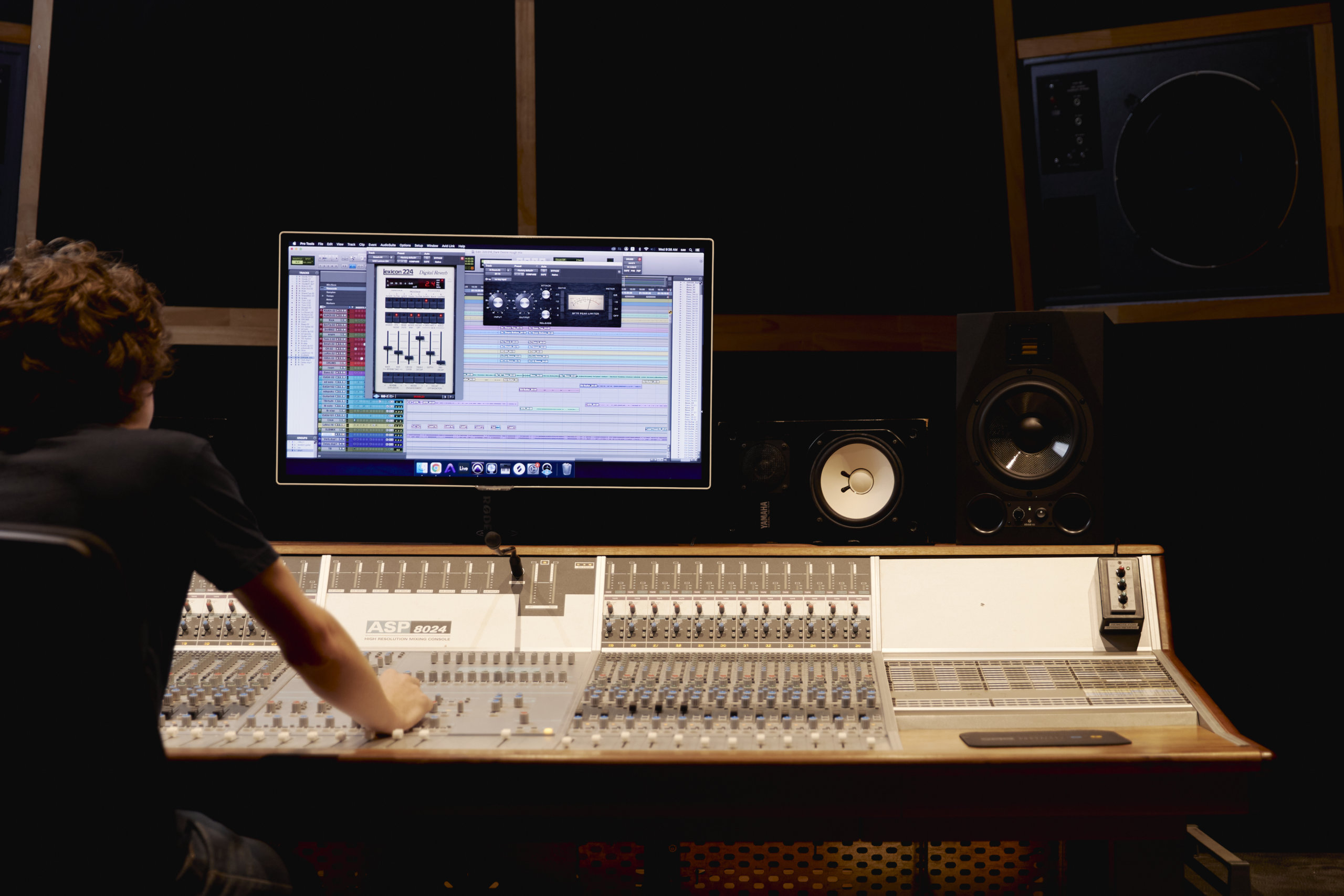
YOUR DREAM CAREER BEGINS NOW
With our industry connections, specialised lecturers and personalised education in world-class facilities, you can unleash your creative future with confidence.
Key Information For Students